

Need an Emergency Dentist Today? East Orange, NJ | Academy Dental
Not sure if your tooth pain is an emergency? Here's how to tell, and what to do now, and how Academy Dental can help you get seen fast.
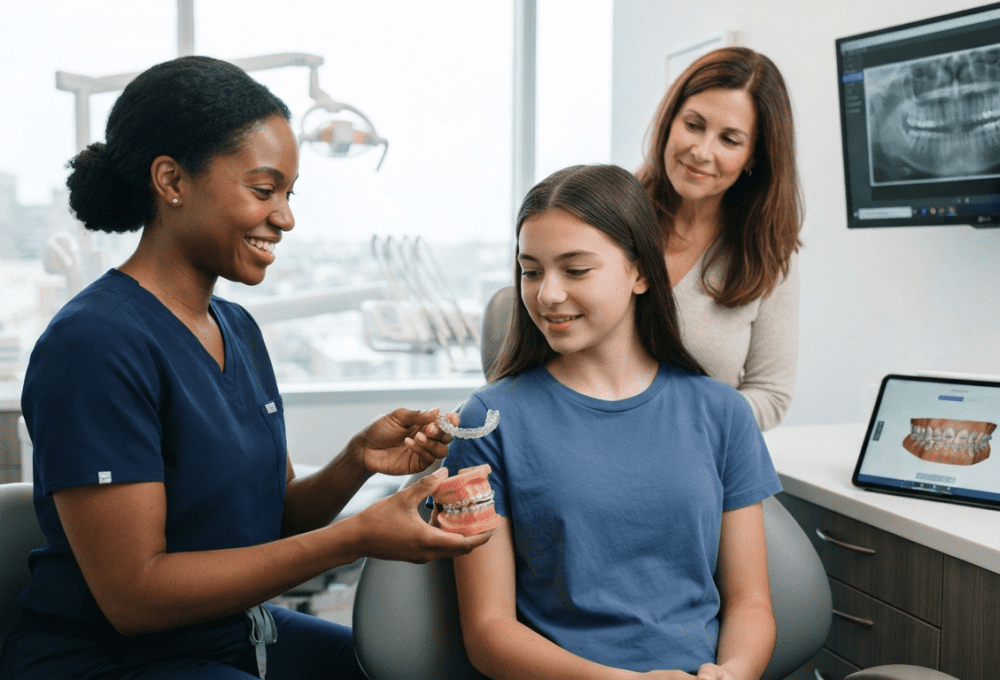
Quick Answer: The right braces option depends on age, bite, and lifestyle, so the first step is an evaluation, not a guess. Children can be evaluated as early as age seven, and teens and adults are welcome too. Academy Dental in East Orange, NJ offers traditional braces and clear aligners, and the dentist explains a treatment timeline after examining the teeth.
A school photo day, a wedding six months out, or a dentist who casually said "those teeth are getting crowded." Any of these can start the search. After a late-night "braces near me" query, the results are a blur of before-and-after photos, and nobody mentions what the first appointment is actually like. The truth is that finding the right option is less about picking a brand and more about matching treatment to a specific mouth. Knowing how the process works makes the first visit far less intimidating.
Braces are not one-size-fits-all, and the first visit is about gathering information. Academy Dental's orthodontics page explains that the team looks at facial balance, bite function, and lifestyle needs before recommending an approach. After examining the teeth, the dentist provides a treatment timeline. This is the right moment to share what matters most, such as a wedding date, a sports season, or a worry about how braces look in photos. Clear goals lead to a clearer plan.
Parents often ask if a child is too young or too old. Evaluations can begin around age seven, which is not the same as starting treatment. At that age, the dentist is simply checking how the jaws and adult teeth are developing. Some children need nothing for years, while others benefit from watching a bite problem early. Baby teeth that fall out too soon, crowding, and thumb sucking past early childhood are common reasons for an early look. Waiting until every baby tooth is gone is not required for a conversation.
Teen years are the most common time for braces, because most adult teeth have come in and the mouth is still growing. Treatment fits around school, sports, and music, so it helps to ask about mouthguards for athletes and about playing wind instruments. Teens are also more likely to skip careful cleaning, and that matters more with braces. Food and plaque collect around brackets, which makes cavities and gum irritation more likely if brushing slips. Making a habit of cleaning early in treatment pays off for the whole timeline.
Plenty of adults wear braces, and the Academy Dental orthodontics page notes that more adults are seeking care. Reasons vary: teeth that shifted after a retainer was abandoned, crowding that makes cleaning difficult, or a bite that causes jaw discomfort. Adults often prefer less noticeable options, and the practice also offers Invisalign clear aligners. Not every bite can be fixed with aligners, so an exam shows which option fits. Gum health matters too, since teeth move best when the gums and bone around them are healthy.
Both options move teeth, and each has trade-offs. Traditional braces are attached to the teeth and cannot be taken out, which suits people who want steady progress without relying on daily habits. Clear aligners are removable, which makes eating and cleaning easier, but they only work when worn consistently. Complex bites sometimes call for braces, while mild crowding or spacing can often be handled with aligners. The dentist can explain which route suits a given case and why, so the choice rests on the teeth and not on guesswork.
Braces make daily cleaning take longer. The Illinois Department of Public Health's guide to oral care with braces recommends brushing with a soft toothbrush angled toward the gumline, cleaning above and below the brackets, and flossing daily with a floss threader. It also lists foods to avoid, including popcorn, taffy, nuts, hard candy, ice, and other sticky or hard items that can bend wires or loosen brackets. Regular cleanings and exams continue throughout treatment, so cavities can be caught early, and a filling can be placed if needed.
Cost is a big part of the decision, and it helps to ask early. Academy Dental accepts most major dental insurance plans, including Medicaid (NJ FamilyCare), and coverage for braces varies by plan, so it is worth calling with the details before the first visit. The practice also offers flexible payment options, including Sunbit financing, with approval and terms that depend on each patient. Asking for a written plan that lists each stage makes comparing options much simpler.
A wire poking the cheek or a loose bracket is usually annoying, not dangerous, and a call to the office is the right first step. A blow to the mouth that breaks a tooth, or severe pain, calls for prompt care, and emergency dentistry is part of what the practice provides. If there is swelling that is spreading across the face or neck, a fever with a swollen face, or any trouble breathing or swallowing, call 911 or go to the nearest emergency room first.
At Academy Dental, families and adults looking for a dentist in East Orange, NJ can expect an exam, a plain-language explanation of what the dentist sees, and a plan that covers the type of treatment, the steps involved, and the expected timeline. Patients who feel nervous about braces, or whose children are unsure, can say so up front, and the team will explain each step before it happens. Questions about timing, comfort, and costs are welcome at any stage of the visit.
Ready to find out which option fits? Request an appointment or call 973-968-6700, and the team will explain what a first visit involves.
1. At what age can a child be evaluated for braces?
Evaluations can begin around age seven. This does not mean treatment starts then, only that the dentist can watch how the teeth and jaws develop.
2. Are braces only for kids and teens?
No. Adults can get braces too, and more adults are seeking care. An exam shows which option fits the bite and the gums.
3. What is the difference between braces and clear aligners?
Braces are fixed to the teeth, while clear aligners are removable trays. The dentist can explain which suits the case and why.
4. Does insurance cover braces?
Coverage varies by plan. Academy Dental accepts most major dental insurance plans, including Medicaid (NJ FamilyCare), so call with plan details to learn how benefits may apply.
5. How should teeth be cleaned with braces?
Brush with a soft brush angled toward the gumline, clean around the brackets, and floss daily with a threader. Regular dental cleanings continue during treatment.


